

.jpeg)

In an era where environmental sustainability is not just a choice but a necessity, the UK government's recent decision to extend the deadline for banning diesel and petrol vehicles from 2030 to 2035 marks a significant shift in the roadmap towards electrification. This decision, while offering additional planning time, brings with it a complex array of considerations for fleet managers, particularly in sectors like Transport, Construction, and Logistics.
At Fleetondemand, we understand the intricacies of this transition for mid-to-large organisations managing substantial fleets. The extension provides four crucial years for businesses to adapt, with new targets stipulating that 80% of new cars and 70% of vans must be electric by 2030, moving to a requirement of 100% by 2035. However, this delay is not without its consequences, as non-compliance could result in substantial fines – up to £15,000 per car and £9,000 per van.
This article dives into the multifaceted transition, guiding fleet managers through these changes. We'll discuss the impact on capital expenditure, including investment trends and leasing options. We'll also examine shifts in resale values, operational costs, and environmental effects, alongside the evolving regulatory and tax landscape.
As the UK tackles transport emissions and corporate environmental goals, infrastructure development like EV charging points becomes critical. We'll explore vehicle availability, maintenance considerations, and the impact on industry reputation and branding.
Fleetondemand, committed to the EV transition, views this extension as a crucial juncture. While it offers more time, it underscores the need for robust EV infrastructure to meet growing demand. Our EV Plus service exemplifies our belief in this transition, providing a flexible, risk-free solution for businesses exploring EV adoption.
Join us in navigating these changes, offering insights and recommendations for informed decision-making during this pivotal transition.
The Government’s Decision: A Closer Look
The UK government's decision to postpone the ban on new petrol and diesel vehicles from 2030 to 2035 has significant implications for the automotive industry and fleet managers. Here's a closer look at the key facts and their implications:
- Extended Planning Time: Fleet managers now have five additional years, until 2035, to transition to electric or alternative fuel vehicles. This extension offers more time for comprehensive planning and assessment of options, costs, and benefits.
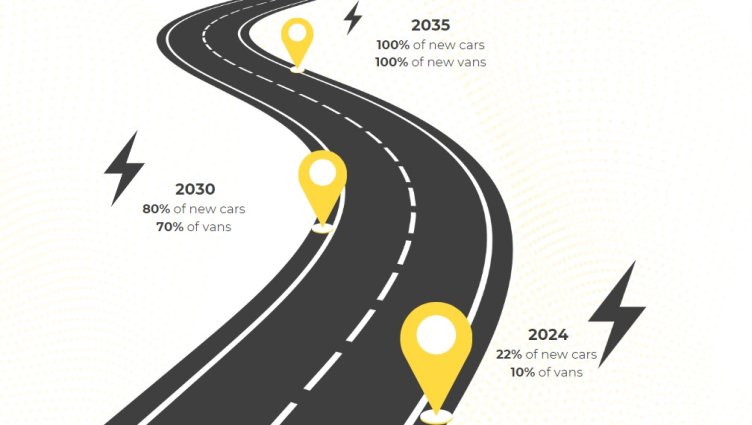
- New Deadlines: By 2030, 80% of new cars and 70% of new vans sold must be electric. By 2035, this requirement increases to 100%, ensuring a complete shift to zero-emission vehicles.
- Compliance Fines: Manufacturers failing to meet these targets will face fines of £15,000 per non-compliant car and £9,000 per van. However, a system for trading credits among manufacturers will be available to mitigate the impact of these fines.
- Zero-Emission Vehicle (ZEV) Mandate: Starting January 2024, the ZEV mandate requires that 22% of new cars and 10% of vans sold by manufacturers be electric. These proportions will increase annually, aligning with the 2030 and 2035 targets.
- Industry Response: The decision has been met with mixed reactions. While some industry representatives welcome the mandate as a crucial step towards net zero, others express concerns about the delay causing uncertainty among investors and car buyers.
- Second-hand Market: Post-2035, petrol and diesel cars and vans will still be available on the second-hand market, easing the transition for consumers.
- Electric Vehicle (EV) Uptake: As of August 2023, EVs accounted for over 20% of the car market. The delay raises questions about the affordability and charging infrastructure needed to support mass adoption.
- Ford's Commitment: Ford has announced a global $50 billion commitment to electrification, launching nine electric vehicles by 2025, with significant investments in the UK. The company emphasises the need for government ambition, commitment, and consistency in EV policy.
This decision represents a critical juncture in the UK's journey towards a greener future, with both opportunities and challenges for fleet managers and the automotive industry at large.
Fleetondemand's Stance on EV Transition

Embracing the Change
Fleetondemand wholeheartedly supports the transition to electric vehicles (EVs). We view the government's decision to extend the deadline to 2035 as a necessary step, but one that should not delay the inevitable shift towards greener transportation. Our stance is clear: the transition needs robust support rather than postponement.
Advocating for Infrastructure Development
We recognise the current popularity of EVs and the corresponding need for enhanced infrastructure. Fleetondemand advocates for significant investment in EV charging stations and other necessary facilities. We believe that strengthening the infrastructure is essential to support the growing demand for EVs and to address the UK's high carbon emissions from transport.
Proactive in Offering Solutions
Understanding the challenges businesses face in transitioning to EVs, Fleetondemand offers the EV Plus service. This service is designed to help businesses test the waters of EV adoption without the commitment of a large capital expenditure. We offer a range of electric and hybrid vehicles for flexible leasing, providing a practical and risk-free solution for businesses adapting to the evolving landscape.
Guiding Businesses Through Transition
Fleetondemand is committed to guiding businesses, especially those reliant on large fleets, through this transition. We believe that the extended deadline should be viewed as an opportunity for businesses to plan and execute a more strategic and informed shift to EVs. Our expertise and services are geared towards making this transition as seamless as possible for our clients.
Sustainability at the Forefront
At the heart of our mission is a commitment to sustainability. Fleetondemand aligns with the global push towards reducing carbon emissions and promoting environmental responsibility. We are dedicated to offering services that not only meet the current demands of our clients but also contribute positively to the broader goal of a sustainable future.
Impact on Businesses and Fleet Management
Capital Expenditure
- Delayed Investments: Fleet managers might postpone investing in EVs and infrastructure, potentially continuing investments in petrol and diesel vehicles or opting for leasing as an interim solution.
- Mixed Reactions to Delay: The extension to 2035 has elicited varied responses. While it offers more time for transition, it also introduces nuances in capital expenditure decisions in the fleet sector.
- Continued Electrification Efforts: Many fleet managers remain committed to electrifying their fleets, viewing the extension as a political move with limited impact on their strategies.
- High EV Penetration in Leasing: Leasing companies report significant demand for electric models, driven by favourable tax rates for zero-emission vehicles.
- Need for Government Consistency: Clear messaging and incentives are crucial for a successful EV transition. The extension could create uncertainty, potentially delaying the switch to EVs.
Resale Values
- Decline in Traditional Vehicle Values: The demand for petrol and diesel cars is expected to fall as 2035 approaches, leading to decreased resale values.
- EVs Becoming More Attractive: Improvements in EV technology and cost reductions will make them more appealing, further diminishing the appeal of traditional vehicles.
- Discounts on Petrol and Diesel Models: Manufacturers are likely to offer discounts on these models before the ban, impacting their resale values.
- Impact of Ultra-Low Emissions Zones: The expansion of these zones will reduce the desirability of combustion-powered vehicles, further decreasing their resale value.
Operational Costs
- Fuel Price Volatility: The prices of petrol and diesel in the UK have shown significant fluctuations, indicating the volatility of fossil fuel prices.
- Lower EV Operational Costs: Electric vehicles offer substantial savings over their lifetime due to lower running and maintenance costs.
- Electricity Price Stability: While there are fluctuations in electricity prices, they are generally less pronounced compared to fossil fuel prices.
Environmental Considerations
- High Transport Emissions: The transport sector is a major emitter of greenhouse gases in the UK, with significant contributions from fleet vehicles.
- Impact on Corporate Environmental Goals: Continued use of fossil fuels in fleets can hinder companies' ESG commitments and contribute to higher emissions.
- Net Zero Goals and Corporate Responsibility: Slow progress in fleet electrification can impede the UK's national net-zero goals, emphasising the importance of transitioning to electric vehicles.
The Future of Fleet Electrification

Regulatory and Tax Implications
The UK government's commitment of £2.5 billion towards EV grants and infrastructure, including the EV chargepoint grant, highlights a strong push for electric vehicle adoption. These incentives are crucial for supporting the transition, especially for fleet managers who need to stay updated on regulatory changes.
Simultaneously, the implementation of Clean Air Zones (CAZs) introduces penalties for high-emission vehicles, varying across different cities. This dual approach of incentives for EVs and penalties for high-emission vehicles underscores the government's strategy to encourage a shift towards cleaner transportation.
Infrastructure Development
The UK's progress in developing EV charging infrastructure is notable, with over 37,000 public charging devices available as of January 2023. However, fleet managers face challenges due to the limited availability and capacity of these facilities.
The significant increase in rapid and fast chargers is a positive sign, but the readiness gap highlighted by a survey showing only 54% of fleets having installed charging infrastructure indicates a need for more strategic planning in transitioning to electric fleets.
Vehicle Availability
Despite a decline in overall car production in 2022, the UK's electric vehicle output has surged, reflecting a shift in manufacturing focus. The expansion of EV options is significant, with the number of available models expected to increase dramatically.
However, consumers and fleet managers are currently facing long waiting times for new EVs, a consequence of increased demand and global supply chain challenges. This situation presents a complex scenario for fleet electrification, balancing the eagerness for adoption against the practicalities of vehicle availability.
Maintenance and Training
With approximately 52% of UK fleet managers already incorporating EVs into their fleets, the focus is shifting towards education and training in EV maintenance and operations. The lower maintenance and service costs of EVs compared to internal combustion engine vehicles highlight the economic benefits of this transition.
However, the extended timeline for the ban on new petrol and diesel cars might delay the urgency for this training, potentially leading to a steeper learning curve when the full transition occurs.
Reputation and Branding
Companies prioritising sustainability can leverage their early transition to EVs for positive branding. The Fleet Sustainability Ranking, reflecting a company's commitment to reducing emissions, plays a significant role in shaping corporate reputation. Surveys indicate that sustainability is a strategic priority in the automotive industry, with most organisations having comprehensive sustainability strategies.
This trend, coupled with the economic feasibility of switching to EVs, positions companies transitioning to electric fleets favourably in terms of both environmental responsibility and financial prudence.
Total Cost of Ownership (TCO)
The TCO for electric vehicles, encompassing purchase price, running costs, maintenance, and resale value, is becoming increasingly favourable. While the initial purchase price of EVs remains higher than conventional vehicles, their lower running and maintenance costs, combined with government incentives, make them a cost-effective choice in the long run.
The depreciation rate of EVs, influenced by factors like low emission zones and brand popularity, also plays a crucial role in determining their overall cost-effectiveness. Fleet managers in the UK need to continuously evaluate the TCO of different vehicle types, considering these evolving factors.
Introducing EV Plus Service
Fleetondemand's EV Plus service revolutionises vehicle rental with its mid-term hire option, offering a unique blend of flexibility and affordability for durations of 90 days or more. This service stands out for its highly competitive rates, combining the convenience of daily rental with the benefits of longer-term leasing, but without the usual constraints.
Key features of the EV Plus service include:
- Competitive Rates: Enjoy substantially lower costs compared to standard daily rentals.
- Flexibility: After the initial 90-day period, you can off-hire or change your vehicle with just one week's notice, free from penalty charges.
- Choice and Quality: Select from a range of specific makes and models, most equipped with Bluetooth and satellite navigation.
- Convenience: Benefit from a free delivery and collection option, directly to your home or office.
- Mileage Allowance: All EV Plus vehicles come with a generous annual mileage allowance of 25,000 miles.
- Hassle-Free Maintenance: Maintenance and 24-hour breakdown assistance are included, ensuring peace of mind.
- Simple Payment: Pay monthly in arrears with no upfront costs, streamlining your financial planning.
Read more about our EV Plus service here.


